-
 Philly Courts and Mayor Kenney: Act Now to Mass Release People from Jail as Coronavirus SpreadsDozens of incarcerated people and prison workers are infected with coronavirus. Yet the Philadelphia courts are forcing the public defenders, private defense attorneys, and the district attorney to approve individual petitions to be seen by judges. That's meant that our jails have only decarcerated by 8-10%, while other cities have let more than half of their incarcerated population go.1,457 of 2,000 SignaturesCreated by The Media Mobilizing Project
 -
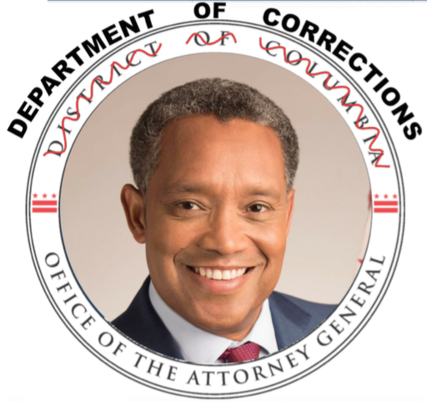 COVID-19 is a death sentence for the people inside D.C. Jail & Halfway Houses #DecarcerateDC NOWFrom the moment the Mayor declared a public health emergency, defense lawyers have filed hundreds of motions in D.C. Superior Court demanding the release of their clients. Despite the flood of motions, D.C. Superior Court judges continue to operate as if business is usual. Rather than acknowledge the life or death circumstances at the D.C. Jail, judges are callously denying bond review motions and continuing to detain countless individuals. While the judges quickly shut down courtrooms to protect their own health and well-being, they have refused to show this same level of concern to the people whose lives hang in the balance inside of the D.C. Jail. With each ruling, the D.C. Superior Court judges are reinforcing a clear reality that Black and Brown people have long known: courthouses are a place where the lives of some are valued and the lives of others are not. But it is not only judges whose inaction risks the lives of everyone at the D.C. Jail. Attorney General Karl Racine has also made clear where he stands on the issue. Despite his self-serving, political rhetoric of being a “progressive” prosecutor, Racine’s actions show that he is nothing more than a politician who says one thing but does another. When the global health pandemic first started to impact the United States, Attorney General Racine authored an op-ed and signed onto a public letter creating the guise that he actually values the lives of incarcerated people. He wrote, “[Prosecutors] should use their discretionary authority to decrease the number of people in jails and prisons by immediately limiting the number of people prosecuted and unnecessarily detained pre-trial.” He urged all jails to “[p]rovide free soap and CDC-recommended hand sanitizer, increased medical care, comprehensive sanitation and cleaning of facilities and other safety measures.” He went on to say that jails should “[use] individual quarantines . . .rather than harmful practices like solitary confinement or generalized lock downs.” It is now clear that at the time he wrote these words, he never imagined he would one day be held accountable to ensure that these conditions were in place in his own backyard. On March 30, 2020, the Public Defender Service for the District of Columbia (PDS) and the American Civil Liberties Union for the District of Columbia (ACLU) filed a federal class-action lawsuit against the Department of Corrections. As evidenced by declarations attached to the complaint, the men and women at the D.C. Jail are being held captive in conditions that amount to torture. Despite the spread of this highly contagious and deadly virus, the DOC is not providing proper medical care and ignoring the desperate cries for help from the sick. The DOC has locked everyone in their cells, often with two people in the same cell, for 23 ½ hours a day. As if this was not horrific enough, the DOC has refused to provide hand sanitizer, basic cleaning products, or even adequate amounts of soap, so people can try their best to protect themselves from a virus that may kill them. Conditions in the jail are so brutal that the union representing the correctional officers who work there are supporting the ACLU’s lawsuit against their own employer, the DOC. According to the union’s attorney, “The DOC management has created an unconscionable public health crisis, and almost certainly guaranteed and accelerated the rampant spread of COVID-19 within the DOC facilities and the communities in which the staff live.” The people trapped at the D.C. Jail are watching and waiting helplessly for the day when their own bodies are ravaged by its symptoms. As the Attorney General for the District of Columbia, Racine’s office represents the Department of Corrections in this suit. Right now, Racine has the opportunity to rise to the challenge and ensure that the DOC complies with his own public proclamations. Instead, Racine is exposing himself as an opportunistic and hypocritical politician. The cowardice of D.C. Superior Court judges and the hypocrisy of Attorney General Karl Racine are no longer just ugly character flaws, they are obstacles endangering the lives of everyone held at the D.C. Jail. We demand that the people of the D.C. Jail be freed. We will not forgive and history will not forget.15,325 of 20,000 SignaturesCreated by April Goggans, Black Lives Matter DC
 -
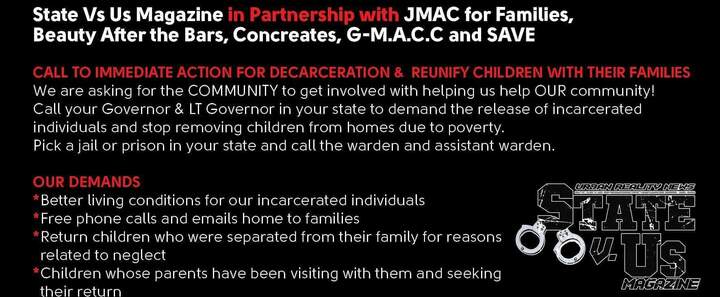 ACT NOW! WE WANT DECARCERATION OF OUR MEN AND WOMEN IN PRISON DUE TO COVID-19State Vs Us Magazine PO Box 29291 Baltimore, MD 21213 Attention Governors, LT Governors, Wardens, and Assistant Wardens: As you are well aware this pandemic has impacted so many lives worldwide. It is very well understood that those individuals who are incarcerated are there as a result of some crime they have committed or maybe didn’t commit either way they’re human. As a result of this virus causing a detrimental global impact incarcerated individuals who can’t practice social distancing in their already controlled environment are most susceptible. COVID-19 has directly and indirectly impacted our community and that includes incarcerated individuals and juveniles. There is no reason to act like these men, women, and children aren’t human as animals are treated better. COVID-19 should not be a death sentence for those accused of a crime nor those found guilty of a crime. The Governor has a moral obligation to ensure the safety of all humans within their state - that includes those incarcerated. As people, as humans, as children, and as adults we all have broken a law, did something wrong and some of us have been able to never see handcuffs or even a prison cell. America has proved over and over how judgment on others continues to be a plague on our community. At some point, our human must kick in and we must ask ourselves when will we act accordingly and think of others at doing right by them. Whether we are in the same tax bracket or not WE are a community. Our children are being taken from the comfort of their homes due to poverty in the middle of a pandemic. How fair is that? Children are being trafficked through the system and parents are hysterical. We ask you what if this were your child, place yourself in their shoes. The relationship between Slavery and families being separated by systems is no accident. Treating animals in the zoo better than families of color is disgusting - color does not remove our humanity - How will you sleep at night when this pandemic is over and nearly every incarcerated person is deceased - Knowing you had the power to change their outcomes and give them a chance to live. This letter serves as an effort to make our communities safer and save those lives who can’t save their own. Here is a list of demands for you to act on ASAP. This has to happen and has to happen now. History has proven that black America is 13% black and the prison population is 34% black. We are the most affected and this is your chance to correct an over 400 years long wrong. I challenge you to adhere to what is necessary and needed to not only improve families’ relationships but communities. *Better living conditions for our incarcerated individuals *Free phone calls and emails home to families *Return children who were separated from their family for reasons related to neglect *Children whose parents have been visiting with them and seeking their return *Children who the family court system has a goal of return to parent *Release all people in jail who are incarcerated on pre-trial and bondable offenses *Release all people who have a year or less *Release disable, sickly, and elderly individuals *Release non-violent offenses *Create emergency housing for returning citizens *We demand full compliance with all of the clauses of the eighth amendment cruel and unusual punishment clauses of the constitution. *We demand full compliance with the CARES ACT and immediate home confinement placement of those individuals who meet the requirements. With all love and prayer that you understand where I’m coming from as you will do the right thing. Tia Hamilton CEO, State Vs Us Magazine313 of 400 SignaturesCreated by Tia Hamilton
 -
 Stop Zoom from allowing Cyber BullyingI downloaded zoom so I could still meet with people. I began to talk to this guy through Facebook messenger. Then after a couple weeks he said he would like to see me (and said Zoom would be perfect). TBH I thought that we were going to have some sexual fun. I didn't tell him I was in a wheelchair, but I didn't think it would matter. Man! I was so wrong! When he saw that I was, the bullying began and continued in every way he could get in touch with me until I blocked him in EVERY way. I stated this campaign so no one else will have to experience what I had to experience, and if they do the person doing the bullying will be held accountable for their actions!.126 of 200 SignaturesCreated by Cristal Griffin
 -
.png) #Decarcerate NE: Prevent a COVID-19 Outbreak in Nebraska Jails & PrisonsIncarcerated and detained Nebraskans are facing a high risk for a COVID-19 outbreak. Not only are these facilities operating above 150% capacity, but people live in unsanitary spaces. It is not a question of if COVID-19 will enter these facilities, but when. “It doesn’t matter what crime you committed. This pandemic is affecting everyone,” Dominique Morgan, Executive Director of Black and Pink explains, “If you were selling a little bit of dope, it shouldn’t be a death sentence. But that’s what COVID-19 is. These people inside can’t choose to social distance. They can’t say, ‘No, you can’t touch my body and shake me down.’ They don’t get to decide who comes into their institutions. They have no autonomy over their body. Imagine going through this pandemic and the fear we have as a community. Now imagine having no power. Being Black. Being trans. You have to have empathy at this time.” Pain and violence are a virus themselves. Not only do they spread without urgent corrective action, but punishment replicates pain and violence. We have space for meeting people where they are at and for healing at home in our communities. We see them everyday. Maybe we give a smile or a nod. Put people in cages, isolated and separated from communities, and we lose their humanity. We forget they too are worthy of respect and love and life. They too have inherent value. We recognize their value. That’s why Black and Pink, along with 13 other Nebraska community organizations, joined in solidarity to demand clear and specific actions for Governor Ricketts and NDCS Director Frakes to immediately implement and reduce the impact of COVID-19 including: 1. Reducing the dangerous overcrowding conditions in NDCS facilities, including the immediate release of individuals at high risk of contracting COVID-19 2. Issuing a publicly accessible Crisis Management Plan, including accountability measures for handling an outbreak 3. Prioritizing the health and safety of currently incarcerated individuals by ensuring appropriate access to medication, prohibiting use of punitive processes, and prioritizing COVID-19 treatment at hospital settings NOT facility medical units/infirmaries. The full text of the letter can be found here: https://drive.google.com/file/d/1J0sAfQIF57WJwJ5gHw__855VSa_X0uJ9/view?usp=sharing Join us in demanding that state officials release their COVID-19 emergency response plan and share how they plan to protect the health of incarcerated Nebraskans during this health crisis! #DecarcerateNE #HealthNotHell HELP US AMPLIFY: Share this petition on Twitter (copy text): Join me and sign this petition to demand that @GovRicketts and @necorrections Director Frakes release their COVID-19 emergency response plan and take immediate action to protect incarcerated people! #DecarcerateNE #HealthNotHell https://bit.ly/2Uy7TA4 Share this petition on Facebook (copy text): I refuse to wait silently while state officials endanger the health and lives of incarcerated Nebraskans. Join me today and sign this petition to demand that Governor Ricketts and NDCS Director Frakes release their COVID-19 emergency response plan and take immediate action to protect incarcerated people! #DecarcerateNE #HealthNotHell https://bit.ly/2Uy7TA4478 of 500 SignaturesCreated by J. Petersen
#Decarcerate NE: Prevent a COVID-19 Outbreak in Nebraska Jails & PrisonsIncarcerated and detained Nebraskans are facing a high risk for a COVID-19 outbreak. Not only are these facilities operating above 150% capacity, but people live in unsanitary spaces. It is not a question of if COVID-19 will enter these facilities, but when. “It doesn’t matter what crime you committed. This pandemic is affecting everyone,” Dominique Morgan, Executive Director of Black and Pink explains, “If you were selling a little bit of dope, it shouldn’t be a death sentence. But that’s what COVID-19 is. These people inside can’t choose to social distance. They can’t say, ‘No, you can’t touch my body and shake me down.’ They don’t get to decide who comes into their institutions. They have no autonomy over their body. Imagine going through this pandemic and the fear we have as a community. Now imagine having no power. Being Black. Being trans. You have to have empathy at this time.” Pain and violence are a virus themselves. Not only do they spread without urgent corrective action, but punishment replicates pain and violence. We have space for meeting people where they are at and for healing at home in our communities. We see them everyday. Maybe we give a smile or a nod. Put people in cages, isolated and separated from communities, and we lose their humanity. We forget they too are worthy of respect and love and life. They too have inherent value. We recognize their value. That’s why Black and Pink, along with 13 other Nebraska community organizations, joined in solidarity to demand clear and specific actions for Governor Ricketts and NDCS Director Frakes to immediately implement and reduce the impact of COVID-19 including: 1. Reducing the dangerous overcrowding conditions in NDCS facilities, including the immediate release of individuals at high risk of contracting COVID-19 2. Issuing a publicly accessible Crisis Management Plan, including accountability measures for handling an outbreak 3. Prioritizing the health and safety of currently incarcerated individuals by ensuring appropriate access to medication, prohibiting use of punitive processes, and prioritizing COVID-19 treatment at hospital settings NOT facility medical units/infirmaries. The full text of the letter can be found here: https://drive.google.com/file/d/1J0sAfQIF57WJwJ5gHw__855VSa_X0uJ9/view?usp=sharing Join us in demanding that state officials release their COVID-19 emergency response plan and share how they plan to protect the health of incarcerated Nebraskans during this health crisis! #DecarcerateNE #HealthNotHell HELP US AMPLIFY: Share this petition on Twitter (copy text): Join me and sign this petition to demand that @GovRicketts and @necorrections Director Frakes release their COVID-19 emergency response plan and take immediate action to protect incarcerated people! #DecarcerateNE #HealthNotHell https://bit.ly/2Uy7TA4 Share this petition on Facebook (copy text): I refuse to wait silently while state officials endanger the health and lives of incarcerated Nebraskans. Join me today and sign this petition to demand that Governor Ricketts and NDCS Director Frakes release their COVID-19 emergency response plan and take immediate action to protect incarcerated people! #DecarcerateNE #HealthNotHell https://bit.ly/2Uy7TA4478 of 500 SignaturesCreated by J. Petersen -
 COVID-19 is A Threat to Our Youth - Tell Maryland to #BringOurKidsHomeMaryland incarcerates hundreds of children across seven youth jails centers and six state-run youth prisons. Like adult jails and prisons, juvenile facilities are inherently high-risk environments where the disease can spread quickly. Children are housed closely together in units or dormitory-style housing, precisely the kind of conditions that have led to the closure of universities all over the country. Even in well-run facilities, the social distancing recommended by the CDC is simply impossible. In such a setting, most of what we can do to protect against the spread of the virus is detrimental to children’s well-being. DJS stopped allowing visitors weeks ago, meaning lawyers can’t visit their clients and families can’t visit their children. School and other programming is cancelled. The use of solitary confinement, which is deeply traumatizing for a child and yet, DJS is already using increased isolation in an attempt to slow the spread of COVID-19. All of these factors not only put a child’s emotional health at risk, they also jeopardize their long-term rehabilitation. Research by health care experts shows that incarcerated populations are most at-risk during a public health crisis. COVID-19 spread quickly in enclosed spaces such as cruise ships and nursing homes and it will spread just as quickly in detention centers, prisons, and jails. Contagious viruses such as COVID-19 spread much faster in detention centers and prisons as incarcerated youth are in close quarters and sometimes in unsanitary conditions. Behind bars, youth are not able to participate in proactive measures to keep themselves safe, such as social distancing, frequently washing hands, or staying in sanitized spaces. Infection control is a challenge in these situations as incarcerated youth are often in large congregate and communal settings. Even if youth are in individual cells, ventilation is often inadequate. Further, youth jails and prisons are unlikely equipped to meet the medical needs of youth if a COVID-19 outbreak inside juvenile detention or correctional facility should occur. Youth will not have many options to stay away from other youth if they become ill and there are limited infirmary beds. If staff become ill, it will be difficult to provide care and support to youth and if lockdowns are utilized, it will only intensify virus infection rates. The J.S. Weese Carter Center was already forced to close when a vendor could no longer service the facility. To stave off a public health emergency in our juvenile jails and prisons, we must immediately and dramatically reduce the number of children who are incarcerated. For those who remain in custody, we must do all we can to protect their health, safety, and constitutional rights. To that end, we call on state and local officials to take swift action. To protect our young people, those who work in these facilities, and the broader community, we must immediately reduce the number of young people in custody as quickly as possible. We are all feeling fear and uncertainty about the future. Imagine how that terror is magnified for families separated from their children by prison bars. Our youth are the future of our nation and, recognizing that the majority of young people in detention and correctional facilities across Maryland are removed from their communities for non-violent charges and pose no threat to community safety, it is unacceptable to allow children to be separated from their families during this global crisis. No one is sure when this crisis will end. But we know that most kids grow out of delinquent behavior without any system involvement. It's time for Maryland to give young people a chance and #BringOurKidsHome.942 of 1,000 SignaturesCreated by Jenny Egan
 -
 DECARCERATE ARIZONA: CRIMINALIZATION AND INCARCERATION ARE NOT PUBLIC HEALTHCARE SOLUTIONS!Thousands of incarcerated people being caged together in small spaces with no real options for quarantine are far more susceptible to the COVID-19 pandemic than most other populations. Due to substandard medical care, incarcerated people suffer disproportionately from chronic health conditions that make them more vulnerable to the virus which will have disastrous effects. COVID-19 outbreaks in prisons and jails are a risk to the entire community. To slow the cycle of people in and out of jail, we must drastically reduce jail and detention center admissions. Less people in jails and detention centers is a definite way to prevent the spread of disease. Public officials must reduce the prison, jail, and detention center's population size to ensure cells are not shared, there are sufficient medical beds for anyone who may need one, and adequate numbers of prison staff to ensure safety for staff, those incarcerated, and visitors. And for those currently in prison, the only public health solution is RELEASE! Arizona cannot afford a failed response to COVID-19!150 of 200 SignaturesCreated by Mass Liberation Arizona
-
 Kym Worthy-COVID-19 DemandsThe decarceral guidelines below are designed to prevent three things: social spreading, jail “churn,” and the deaths of vulnerable people. Social Spreading In order to prevent the rapid growth of COVID-19 from overburdening our health-care system and claiming lives, both those in secure facilities and the people who work in them, it is the responsibility of decision-makers at every level to prevent and contain the spread of the virus by taking action to promote the most effective strategy in abating the pandemic: social distancing in order to slow “community spread.” The Particular Issue of Jail and Prison “Churn” Jails and Prisons combine the worst aspects of a cruise ship and a large public gathering and, thus, can be the perfect breeding ground for the spread of COVID-19. People are constantly booked into and out of jail and prison facilities and each night guards, vendors, and other jail staff are going home while others are coming in- which results in a massive turnover. For example, more than half of the people in jail are only in there for two to three days. Further, enclosed structures like jails can cause COVID-19 to spread like wildfire and introducing just one person with it can lead to it impacting not just everyone inside the jail or prison but anyone leaving the facility—whether a person who is released or staff returning back to their homes— who then interact with their communities. Preventive Measures Cannot Be Taken in Jails and Prisons. Experts recommend that to protect the people most vulnerable from death or serious illness from COVID-19 that they are appropriately separated through social distancing. Yet separating sick people from well people to prevent the disease from spreading can be nearly impossible in prison due to logistical considerations.1,776 of 2,000 SignaturesCreated by Nicholas Buckingham
 -
 Humanity Not Cages: Demand a Just and Humane Response to COVID-19It is not a matter of if but when the coronavirus will enter prisons and jails, according to health experts. The consequences of that eventuality will be devastating. COVID-19 outbreaks in prisons and jails will spread “like wildfire” due to close quarters, unsanitary conditions, a population that is more vulnerable to COVID-19, and the large number of people that cycle through the criminal justice system. The risk extends far beyond those who are incarcerated. COVID-19 outbreaks in jails and prisons threaten the larger public, as hundreds of thousands of individuals churn through jails on a daily basis and correctional, medical and other staff interact with the incarcerated population and circulate back into communities. With 2.3 million people in the United States in prison or jail on any given day, an outbreak in these facilities poses a threat to the entire country. If federal, state, and local officials take swift action, they can not only prevent the spread of COVID-19 inside prisons, jails, and detention centers and ensure the safety and wellness of our loved ones behind cages, but they can also have an enormous impact on the wellness of the rest of the country.240 of 300 SignaturesCreated by Dalila Reynoso
-
 Michigan Covid-19 Statewide Immediate Release of Vulnerable incarcerated PeopleCovid-19 presents a threat to human life. We believe all human life is valuable, and are ensuring that those most at risk, like incarcerated individuals, are being granted the relief necessary to protect themselves and their families. The particularly vulnerable incarcerated community members and those currently being impacted by the system need support in this moment and not continued trauma. Action is crucially important now to avoid public health mishaps like the scabies outbreak at Huron Valley Prison in 2019. Now more than ever, we need transformative criminal justice action to limit the damage that the system can do during the pandemic outbreak.2,365 of 3,000 SignaturesCreated by Tim Christensen
 -
 Release people incarcerated pre-trial in Forsyth CountyEven though public visitation has been suspended at the LEDC, all people incarcerated are still at high risk for infection due to their close-quarters living situation. Any guard, other staff, or newly processed detainee could potentially introduce the virus into the population, where it would rapidly spread. Staff members and at least one person incarcerated at multiple prisons in other states already tested positive for COVID-19. It is only a matter of time before it reaches the LEDC as well. Drastically reducing the jail population will limit the harm COVID-19 is able to cause. This is especially true when it comes to those already vulnerable—the elderly and those with compromised immune systems. The longer the jail continues to house people, the greater the risk grows to those individuals, their attorneys, their families, LEDC staff, and the community at large. Measures such as visitation lockdowns and segregation are not likely to be effective. The daily churn of potentially asymptomatic people—both incarcerated and employed—in and out of the jail will facilitate the spread of COVID-19 within the jail and the community at large. The fewer people present in the LEDC, the lesser the risk. Mecklenburg and Buncombe counties—in addition to out-of-state jails in and around LosAngeles, Cleveland, and New York City—have already begun releasing incarcerated people in the interest of public health. The Forsyth County Community Bail Fund urges Winston-Salem mayor Allen Joines, Forsyth County Sheriff Bobby Kimbrough, District Attorney Jim O’Neill, Chief Magistrate Denise Hines, Clerk of Superior Court Renita Thompkins Linville, Chief Probation/Parole Officer Sherri Cook, Senior Resident Superior Court Judge Hon. Todd Burke, and Chief District Judge Hon. Lisa Menefee to take necessary and immediate action to save lives. Signed, Forsyth County Community Bail Fund ACLU of North Carolina The Bail Project Community Justice Center Hate Out of Winston Prisoner Outreach Initiative Triad NC Socialist Rifle Association Wake Forest Baptist Church Winston-Salem Democratic Socialists of America Aramie Bloom Julie Brady Jen Oleniczak Brown - Fearless Winston-Salem Richardo Brown Jocelyn Bryant - Triad Central Labor Council President Chris Cecile - Triad Central Labor Council Vice President Nathan Davis Sara González Ricky Johnson Jr. Chris Lutz Pastor Lia Scholl Molly Morgan Lillian Podlog Cody Remillard Emily Thompson Brittany Ward246 of 300 SignaturesCreated by Julie Brady
 -
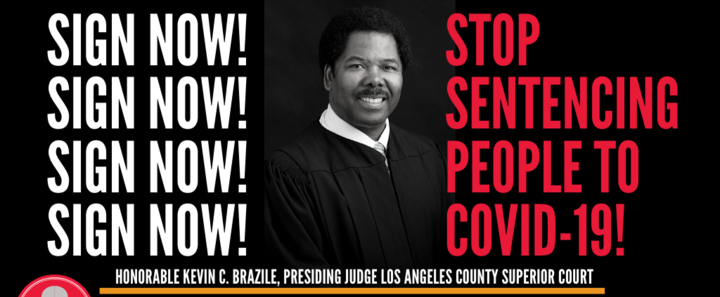.png) Humanity Not Cages: Demand a Just and Humane Response to COVID-19The COVID-19 pandemic has brought the legal system to a halt in Los Angeles County. Superior Court Judge Kevin Brazile, the county’s presiding judge, has issued three orders taking steps to address COVID-19, but none of them outline the policies necessary to quickly and appropriately depopulate the jails—the most important way to curb the spread of the disease and save thousands of lives. On March 17, Brazile issued his initial order closing all courts in the county for three days. Five days later, he ordered the Sylmar Courthouse to be closed for three days following the news that a deputy public defender tested positive for coronavirus. On March 23, Brazile blocked public access to all county courthouses, placed delays on many criminal cases, and ordered the prioritization of bail hearings. While these types of emergency orders appropriately protect judges, attorneys, and court staff from this deadly virus, they may make the situation all the more dangerous for the thousands of Angelenos, mostly Black and Latinx, who remain trapped in jails and juvenile halls, awaiting court dates. The conditions inside Los Angeles County jails and juvenile halls are already appalling. In Men’s Central Jail, some people share a cell about six feet by six feet, and generally only leave the cell for one hour a day. They lack necessary hygiene products and adequate medical treatment. Under ordinary circumstances, the jail is unsafe; during this pandemic, it is a death sentence. The virus has entered the courts, and over the weekend, a person who is incarcerated in one of the jails tested positive for COVID-19; several individuals’ test results are pending. It is only a matter of time before the virus spreads, as it has in jails around the country. On March 24, Brazile issued a press release announcing that an agreed upon list of individuals held pretrial will be released from custody. However, this announcement lacked any information about the criteria for release, the number of people who will be released, or a long-term release strategy. There is still no information on whether people on this list have been released. Those who remain in custody, however, could remain locked up in these dangerous conditions for even longer than usual. As part of Brazile’s March 17 order, those booked into custody for felonies may now have to wait seven days before seeing a judge, instead of the usual 48 hours, and their trials can be extended by up to an additional 30 days. Faced with the possibility of an additional month in jail awaiting trial, and at extreme risk of contracting a deadly disease, most people will give up their trial right, or plead out, if it means getting out sooner. This coercive process is unfair, undermines the integrity of our courts, and can saddle people with wrongful convictions and lifelong consequences. Brazile has the power to right this ship and implement policies that protect everyone. California law allows judges to release adults charged with misdemeanors and all non-capital felony offenses without imposing money bail. The judiciary took the appropriate step and mandated $0 bail for most misdemeanors and certain categories of felonies. It is unclear whether these standards apply to individuals who were arrested and incarcerated before the COVID-19 crisis. It is urgent that people in custody pretrial are evaluated and quickly released, particularly those who are in custody simply because they cannot afford bail. If the judiciary does not act, thousands of lives will continue to be at risk. While courts are closed to the public, attorneys, judges, and court employees are still going to court. According to Court Watch Los Angeles, some courtrooms had 30 to 40 people present as recently as March 20, clearly violating social distancing recommendations. With potential plans to proceed by consolidating even more cases in fewer courtrooms in the county, this situation could be exacerbated. By overburdening courtrooms with more cases, it is certain that people in custody will remain there longer while waiting to see a judge or resolve their case. This is why Brazile must act immediately and order a release of a broad group of people: those who are not substantially likely to cause bodily harm to another person and those who are being held solely on probation/parole violations. In addition, judges should use their authority to release, without setting bail, those brought into court on their first appearances. Hearings for people out-of-custody should be postponed so that courts can prioritize arraignments, preliminary hearings, trials, and juvenile detention hearings for all individuals in custody and hold them within the normal statutory time limits. When hearings do occur, each courthouse should identify practices that allow for the social distancing necessary to keep everyone safe. Failure to do the above will severely endanger people trapped in jail during this pandemic, as well as the jail staff, their families and their communities. Judge Brazile must act now, before it’s too late. Alicia Virani is the Gilbert Foundation associate director of the Criminal Justice Program at UCLA School of Law and was previously a public defender in Orange County. Update: On Thursday, after this article was published, Presiding Judge Kevin Brazile issued an order indicating that Los Angeles County courts will extend preliminary hearings, trials, and arraignments well beyond what his March 17 order outlined: People in jail and charged with a felony may now have to wait up to 30 court days—the equivalent of six weeks—for their preliminary hearing and an additional 60 days for their trial.1,105 of 2,000 SignaturesCreated by Eunisses Hernandez
Humanity Not Cages: Demand a Just and Humane Response to COVID-19The COVID-19 pandemic has brought the legal system to a halt in Los Angeles County. Superior Court Judge Kevin Brazile, the county’s presiding judge, has issued three orders taking steps to address COVID-19, but none of them outline the policies necessary to quickly and appropriately depopulate the jails—the most important way to curb the spread of the disease and save thousands of lives. On March 17, Brazile issued his initial order closing all courts in the county for three days. Five days later, he ordered the Sylmar Courthouse to be closed for three days following the news that a deputy public defender tested positive for coronavirus. On March 23, Brazile blocked public access to all county courthouses, placed delays on many criminal cases, and ordered the prioritization of bail hearings. While these types of emergency orders appropriately protect judges, attorneys, and court staff from this deadly virus, they may make the situation all the more dangerous for the thousands of Angelenos, mostly Black and Latinx, who remain trapped in jails and juvenile halls, awaiting court dates. The conditions inside Los Angeles County jails and juvenile halls are already appalling. In Men’s Central Jail, some people share a cell about six feet by six feet, and generally only leave the cell for one hour a day. They lack necessary hygiene products and adequate medical treatment. Under ordinary circumstances, the jail is unsafe; during this pandemic, it is a death sentence. The virus has entered the courts, and over the weekend, a person who is incarcerated in one of the jails tested positive for COVID-19; several individuals’ test results are pending. It is only a matter of time before the virus spreads, as it has in jails around the country. On March 24, Brazile issued a press release announcing that an agreed upon list of individuals held pretrial will be released from custody. However, this announcement lacked any information about the criteria for release, the number of people who will be released, or a long-term release strategy. There is still no information on whether people on this list have been released. Those who remain in custody, however, could remain locked up in these dangerous conditions for even longer than usual. As part of Brazile’s March 17 order, those booked into custody for felonies may now have to wait seven days before seeing a judge, instead of the usual 48 hours, and their trials can be extended by up to an additional 30 days. Faced with the possibility of an additional month in jail awaiting trial, and at extreme risk of contracting a deadly disease, most people will give up their trial right, or plead out, if it means getting out sooner. This coercive process is unfair, undermines the integrity of our courts, and can saddle people with wrongful convictions and lifelong consequences. Brazile has the power to right this ship and implement policies that protect everyone. California law allows judges to release adults charged with misdemeanors and all non-capital felony offenses without imposing money bail. The judiciary took the appropriate step and mandated $0 bail for most misdemeanors and certain categories of felonies. It is unclear whether these standards apply to individuals who were arrested and incarcerated before the COVID-19 crisis. It is urgent that people in custody pretrial are evaluated and quickly released, particularly those who are in custody simply because they cannot afford bail. If the judiciary does not act, thousands of lives will continue to be at risk. While courts are closed to the public, attorneys, judges, and court employees are still going to court. According to Court Watch Los Angeles, some courtrooms had 30 to 40 people present as recently as March 20, clearly violating social distancing recommendations. With potential plans to proceed by consolidating even more cases in fewer courtrooms in the county, this situation could be exacerbated. By overburdening courtrooms with more cases, it is certain that people in custody will remain there longer while waiting to see a judge or resolve their case. This is why Brazile must act immediately and order a release of a broad group of people: those who are not substantially likely to cause bodily harm to another person and those who are being held solely on probation/parole violations. In addition, judges should use their authority to release, without setting bail, those brought into court on their first appearances. Hearings for people out-of-custody should be postponed so that courts can prioritize arraignments, preliminary hearings, trials, and juvenile detention hearings for all individuals in custody and hold them within the normal statutory time limits. When hearings do occur, each courthouse should identify practices that allow for the social distancing necessary to keep everyone safe. Failure to do the above will severely endanger people trapped in jail during this pandemic, as well as the jail staff, their families and their communities. Judge Brazile must act now, before it’s too late. Alicia Virani is the Gilbert Foundation associate director of the Criminal Justice Program at UCLA School of Law and was previously a public defender in Orange County. Update: On Thursday, after this article was published, Presiding Judge Kevin Brazile issued an order indicating that Los Angeles County courts will extend preliminary hearings, trials, and arraignments well beyond what his March 17 order outlined: People in jail and charged with a felony may now have to wait up to 30 court days—the equivalent of six weeks—for their preliminary hearing and an additional 60 days for their trial.1,105 of 2,000 SignaturesCreated by Eunisses Hernandez