100 signatures reached
To: Jerry Moran; Mike Bost; Adam Schiff; Nanette Barragán; Ted Lieu; Gavin Newsom; Bob Archuleta; Caroline Menjivar; Thomas Umberg; Pilar Schiavo; Hilda Solis; Holly Mitchell; Lindsey Horvath; Janice Hahn; Kathryn Barger; Barbara Ferrer
Stop the Systemic Harm Against Veterans, Women Veterans, and Their Children
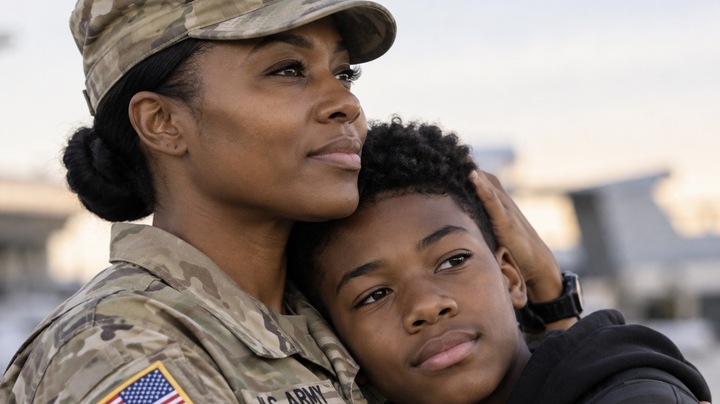
We call on Veterans, military families, parents, survivors, advocates, organizations, and concerned citizens in every state to sign this petition and stand with families nationwide who have been negatively impacted by Family Court, Dependency Court, child welfare, domestic violence, post-separation abuse, family separation, and fragmented government systems.
We call on federal lawmakers and lawmakers across the United States to recognize these problems are not confined to California. Veterans and military-connected families across the country have been and continue to be negatively impacted while navigating Family Court, child welfare, and related systems without coordinated Veteran-specific and family-centered support.
California has an opportunity to lead. We call on California lawmakers to advance these proposals beginning with the 2027 legislative session and on Congress and federal agencies to address nationwide gaps affecting Veterans and military families.
We call for state and federal action to:
• Establish wraparound support for Veterans and military-connected families in Family Court, Dependency Court, and child welfare systems, including early identification of Veteran status and connection to available services.
• Provide early intervention, family-preservation, and parent-child relationship recovery services when healthy parent-child relationships are disrupted or deteriorating.
• Strengthen protections for survivors of domestic violence and post-separation abuse and ensure police reports, protective orders, documented abuse, and safety concerns are not ignored or minimized.
• Require data collection, monitoring, reporting, and accountability involving domestic violence and post-separation abuse in Family Court, Dependency Court, child welfare, and related systems so abuse, patterns of harm, safety concerns, agency responses, and outcomes can be identified, tracked, and evaluated.
• Address systems that allow children to become unnecessarily or wrongfully separated from a parent and intervene before parent-child relationships suffer long-term or irreversible harm.
• Protect parents’ lawful access to their children’s educational, medical, mental-health, and other important records and information.
• Address the disproportionate representation of Black and Native American children and families in Family Court, Dependency Court, child welfare, and foster care through transparent data collection, monitoring, reporting, and accountability.
• Examine how race, Veteran status, disability, domestic violence, economic circumstances, access to counsel and behavioral-health services, and institutional decision-making intersect in these systems.
• Close federal gaps that leave Veterans in Family Court and Dependency Court without coordinated legal, mental-health, family, and Veteran-specific support.
We call on lawmakers to advance these legislative proposals:
• Veterans Family Wellness and Justice Act — creates a Veteran-informed Family Court and family-support framework with early identification, wraparound services, behavioral-health support, family preservation, and interagency coordination.
• Veteran Parent Identification, Accountability and Family Preservation Act — strengthens Veteran identification, services, early intervention, family preservation, and accountability.
• Parent-Child Relationship Recovery, Mental Health, and Campus Access Act — provides relationship recovery, behavioral-health services, family preservation, school access, and cross-system training.
• Minor’s Counsel Accountability and Transparency Act — establishes standards for investigation, communication, factual verification, recommendations, training, transparency, and accountability.
• California Intentional Interference with the Parent-Child Relationship Act — addresses intentional interference with lawful parent-child relationships through prevention, intervention, remedies, and family-centered solutions.
• California Participant Recording and Accountability Act — improves recording, documentation, transparency, accountability, and access to accurate records.
• Crime Victim Response and Law Enforcement Accountability Act — strengthens responses to post-separation abuse, domestic violence, homicide-suicide and familicide risk, law-enforcement accountability, intervention, and cross-system coordination.
• Child and Family Relationship Identification and Verification Act — reforms damaging “noncustodial parent” terminology, requires accurate identification of parent-child relationships, separately identifies residence, parenting time and legal authority, protects access to records, and establishes accountability when lawful parental rights are improperly denied.
Women, Veterans, parents, and advocates have warned government institutions for years about failures involving domestic violence, post-separation abuse, child safety, family separation, racial disparities, and conduct that undermines, damages, or deliberately disrupts a child’s relationship with a loving and involved parent. Those warnings must result in action before more families suffer preventable and irreversible harm.
Read the complete legislative proposals and supporting documents:
Why is this important?
Child welfare systems do not identify parents who are military Veterans, leaving Veterans without connection to Veteran-specific resources and wraparound support while they and their children may experience prolonged separation. Veterans also navigate Family Court, Dependency Court, child welfare, domestic violence, law enforcement, and other systems operating in silos. These failures can cause family separation, disrupted parent-child relationships, homelessness, domestic violence, suicide, homicide, and devastating outcomes.
Veterans Justice Support Gap
The Department of Veterans Affairs operates Veterans Justice Outreach (VJO) to identify Veterans in the criminal justice system and connect them to VA services. Veterans Treatment Courts demonstrate this coordinated approach through courts, VJO specialists, treatment providers, peer mentors, defense counsel, and other partners.
Yet Veteran parents in Family Court, Dependency Court, and child welfare do not have an equivalent nationwide VA structure providing coordinated identification, intervention, and connection to Veteran-specific resources and wraparound support.
Veterans and their children should not have to wait until a crime is committed or a family reaches a crisis point for coordinated support. Assistance should begin when a Veteran parent enters Family Court, Dependency Court, or child welfare—before prolonged parent-child separation, homelessness, domestic violence, homicide, suicide, or criminal justice involvement.
Veterans with Disabilities in Family Court
California enacted protections concerning Veterans’ disability compensation effective in 2026, but implementation remains incomplete because applicable Judicial Council family-law forms have not yet been updated. Veterans may therefore continue to have their disability compensation impacted while the law and forms remain out of alignment.
The problem is nationwide. Veterans with disabilities should not be financially destabilized in Family Court because they receive disability compensation resulting from military service. Veterans need protections that work in practice regardless of the state in which they live.
In California, Black children represent approximately 5% of the child population but 21% of children in foster care. Black and Native American children are represented in foster care at about four times their population rate in California.
In Washington, D.C., Black and African American children represented about 90% of the foster care population as of September 2024.
In 2023, 6,398 Veterans died by suicide—17.5 every day. VA found relationship problems in 31.9% of reviewed Veteran suicide cases from 2021 through 2023. In January 2025, 32,495 Veterans were experiencing homelessness nationwide, including 13,518 who were unsheltered.
Source:
https://www.mentalhealth.va.gov/MENTALHEALTH/docs/data-sheets/2025/2025_National_Veteran_Suicide_Prevention_Annual_Report_PART_1_FINAL.pdf
https://department.va.gov/homeless/point-in-time-pit-count/
https://www.mentalhealth.va.gov/MENTALHEALTH/docs/data-sheets/2025/2025_National_Veteran_Suicide_Prevention_Annual_Report_PART_1_FINAL.pdf
https://department.va.gov/homeless/point-in-time-pit-count/
VA reports that one-third of women Veterans experience intimate partner violence during their lifetime, compared with less than one-quarter of civilian women. Those who experience it are three times more likely to experience housing instability or homelessness.
The connection between family crisis, domestic violence, homicide, and suicide is not new. Department of the Army epidemiologists examined homicide-suicides involving soldiers and their families at Fort Bragg and identified marital discord as a contributing circumstance. Documented military cases also identify separation, relationship problems, and domestic violence as circumstances associated with suicide and homicide-suicide.
Suicide review teams focus on Veteran suicide deaths but do not fully address homicide-suicides in which family members are killed before the Veteran dies by suicide. Reviews must examine what occurred before the deaths, including domestic violence, separation, Family Court, Dependency Court, child welfare, law enforcement, health care, and other government involvement.
Women, including women Veterans, must be central to this work. On July 7, 2026, Los Angeles County Supervisors Hilda L. Solis and Lindsey P. Horvath introduced “Reinforcing Targeted Domestic Violence Prevention Efforts,” highlighting children and mothers killed by fathers/spouses and a rise in cases involving individuals killing intimate partners and family members before dying by suicide.
LA County Board of Supervisors — July 7, 2026 Motion:
https://file.lacounty.gov/SDSInter/bos/supdocs/218606.pdf
https://file.lacounty.gov/SDSInter/bos/supdocs/218606.pdf
The Reimagining Child Safety Group began warning Los Angeles County in 2020 about systemic failures affecting women, children, Veterans, and families, including domestic violence, family separation, child safety, and preventable deaths. The same concerns remain.
Through the advocacy of U.S. Army Veteran Latia Suttle concerning Veterans in Family Court, Children’s Court, and child welfare, the Los Angeles County Veterans Advisory Commission voted in October 2019 to create an Ad Hoc Committee. The Committee later identified the need for a coordinated Veteran support pathway, early identification, and connections to resources, peer support, and wraparound support.
LA County Veterans Advisory Commission — October 9, 2019 Minutes:
https://mva.lacounty.gov/wp-content/uploads/2022/03/MINUTES-for-October-09-2019.pdf
https://mva.lacounty.gov/wp-content/uploads/2022/03/MINUTES-for-October-09-2019.pdf
Child welfare, Family Court, Dependency Court, domestic violence, prolonged parent-child separation, Veteran homelessness, suicide, homicide, and homicide-suicide intersect. These systems must stop operating in silos.
We need legislation now. Once reforms become law, data must be collected and reported to track implementation, outcomes, disparities, and accountability.
This is a nationwide problem. California needs to lead the way by identifying parents who are military Veterans, connecting them to Veteran-specific resources and wraparound support, closing systemic gaps, strengthening accountability, and establishing reforms that can serve as a model for the nation.